
Author: Inge Patsch

  • Sustainable AI use: Why I have canceled ChatGPT

    Sustainable AI use: Why I have canceled ChatGPT

    Yesterday I canceled my ChatGPT account

    Well, it was actually a week ago, as I wanted to research this article in detail.

    It all started with a video by Rutger Bregman on LinkedIn. He drew my attention to something I had been aware of in passing for some time – but hadn’t had room for in the turmoil between work and family: Greg Brockman, co-founder and president of OpenAI – the company behind ChatGPT – donated 25 million dollars together with his wife to “MAGA Inc.”, which is close to Trump. The largest single donation of the entire election cycle. And that’s not all: Since January 2026, the US immigration authority ICE has been using OpenAI’s GPT-4 to screen applicants for its recruitment wave – the authority responsible for Trump’s mass deportations of and violence against migrants.

    That was the moment when I decided to actively engage not only with the use of AI, but also with its impact.


    The most sustainable AI? Maybe none at all?
    Statistics: 
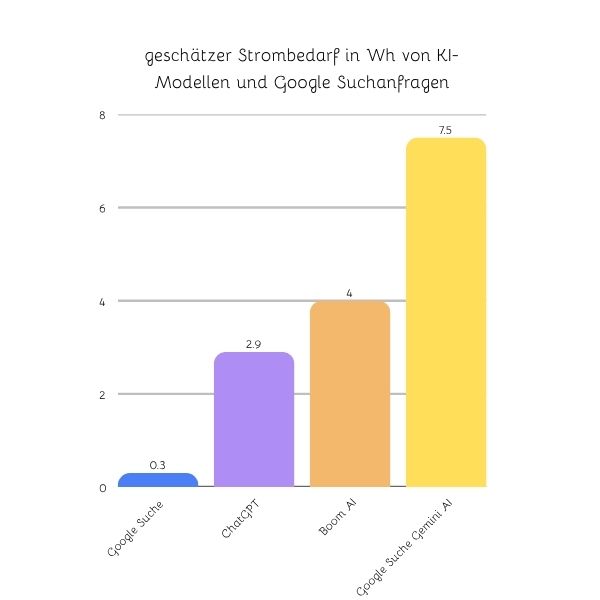
estimated power consumption in Wh of AI models and Google search queries
Google Search: 0.3 Wh
ChatGPT: 2.9 Wh
Boom AI: 4 Wh
Google Search Gemini AI: 7.5 Wh
    Alex de Vries (2023), Joule, Vol. 7, Issue 10, https://doi.org/10.1016/j.joule.2023.09.004

    First of all, I clarified what I already knew: I have known for some time that AI is one of the most resource-hungry technologies of our time and that the operation of data centers often takes place in countries with already critical infrastructure. Only that AI consumes massively more energy than other online services. While a search query without AI consumes 0.8 Wh, a Gemini prompt consumes an average of 7.5 Wh. And then there’s the water consumption for cooling the servers – in areas where water is already scarce, there can be a trade-off between the data center and the population.

    In view of the fact that our energy is limited, the most honest answer to the question “Which AI should I choose for sustainable use?” would be: none.

    But just as someone who lives with children on a mountain without public transport should theoretically not use a car, in practice it is often only feasible with massive reductions in quality of life. When building my website, my programs, writing texts and structuring complex content, I would lose so much time without AI that it would feel like I was typing a proposal on a typewriter.

    All right then. If I’m going to use them – then at least the alternative with the fewest side effects.


    The systemic view: What really triggers every AI request

    As someone who not only preaches systemic thinking, but also practices it, I can’t stop here.

    Every single AI request has an impact on various other areas of our companies:

    1. energy & water. Every request consumes electricity and water to cool the server. This affects local water cycles, not just in the abstract, but in very concrete terms for local people.

    2. money & political power. Every subscription brings money into an operator’s coffers – which flows not only into product development, but also into lobbying, political networks and donations.

    3. data & monitoring. Every request reveals a little more about you and the world to AI – and therefore presumably also to US intelligence agencies. A law applies to all American providers: the CLOUD Act, which allows US authorities to access data from US companies, regardless of the server on which it is stored.

    4. impact on the psyche of the individual and thus on social coexistence. Because every interaction with AI changes us. Especially when AI is programmed to build relationships with people.

    5. change in the economy, in particular the labor market and the distribution of overall economic value added. It is already apparent that there has been a 16% decline in AI-related entry-level jobs(see study). Value creation, which was previously widely distributed across the labor market, is increasingly flowing towards a few corporations instead of a large workforce, which will lead to poverty and changes in purchasing power.

    These and probably many other levels cannot be resolved by closing your eyes. If you don’t ask whose infrastructure you are using, whose values have been incorporated into the models and where your subscription dollars are going, you are part of the system that you actually want to change.

    And yet, withdrawing from digital visibility will not solve the problem either. The social effects will still become apparent. What’s more, when conscious, reflective people withdraw from the online space, they leave the field to those who go all out without reflection.

    We could ask a lot of questions in the search for a responsible approach to AI.

    There are questions that we can ask ourselves as a society, such as:

    • Do we have a social strategy that cushions the shifts in the labor market?
    • Do we want our children to develop an emotional relationship with an AI? If not, how do we commit to ensuring that such things are not developed in the name of profit?
    • How can we finance research and development in such a way that organizations working for the common good have a chance?

    We as a society should pay urgent attention to these aspects. Because the further development of AI in the private sector is progressing: whether we advocate ethical and fair regulatory frameworks or not.

    Which AI is best to use?

    For me, however, the question still remained: which AI is best to use? Derived from the principles of regenerative organizations, the following questions were interesting for me in the next step:

    • What political entanglements does the company have behind the software and what money flows to whom?
    • How safe is AI?
    • How is my data handled there? Who has access to my profile?

    Let’s get to the bottom of these questions:

    Is there a politically independent AI?

    My initial research into the major providers was sobering:

    Behind every major AI provider (ChatGPT, Claude, Gemini) are the big tech companies from Silicon Valley – all of them engage in massive lobbying or are politically entangled. Some are close to the Democrats, others to the Republicans. Mistral does it the European way: in Brussels and Paris.

    Money flows to political parties as support and it is mentioned positively when a provider such as Anthropic (Claude) refuses a government contract because it would have had to disclose user data.

    So I did some more searching and identified two smaller providers:

    Lumo from the company Proton. The company Proton, based in Switzerland, is owned by a non-profit foundation and specializes in online services with secure privacy.

    Confer from the founders of Signal: Signal is a messenger service that relies on end-to-end encryption and data protection. It is therefore often used by institutions such as kindergartens and schools where a high level of data protection needs to be ensured.

    The big difference: profit logic vs. the common good

    If we compare the security and ethical standards of the big players (OpenAI, Google, Anthropic) with the new, public interest-oriented alternatives, the systemic difference becomes clear. With the Silicon Valley giants, “security” is often a marketing tool to overcome regulatory hurdles, while the business model is based on data exploitation and growth pressure.

    • OpenAI (ChatGPT) and Google (Gemini) operate as (or have been transformed into) for-profit companies. Their research to ensure that AI shares human values often conflicts with the pressure to maximize user engagement and develop new markets. The political entanglement – from donations to both camps to contracts for government surveillance – shows that their ‘neutrality’ is an illusion.
    • Anthropic (Claude) is often perceived as more ethical, as they explicitly propagate “Constitutional AI” and reject government data access, but here too, capital flows from tech billionaires (such as Jeff Bezos), which does not rule out long-term conflicts of interest.

    The paradigm shift at Proton (Lumo) and Signal (Confer): Have no focus on profit maximization.

    • Proton is structurally immunized against takeover and greed for profit by the Proton Foundation. The AI (Lumo) is not a means to sell your data, but a tool that is at the service of your privacy. There is no need to sell your attention through “clickbaiting” or manipulative conversation.
    • Signal (with its AI tool Confer) builds on the same foundation: open source, no advertising, no data collection.

    Due to the common good orientation and the high value of privacy of both organizations, there are already structurally fewer incentives to get involved in opaque deals with political rulers or financial arrangements. On the contrary, Proton drew attention to itself when it brought charges against Apple’s app store policy because it enables censorship.

    This initial analysis already reveals two different camps. The big players with deep political entanglements and the two “smaller” providers for whom political impartiality is part of their mission.

    However, the fact that a company has no political involvement does not mean that my data is under my data sovereignty. “But I have nothing to hide,” you might be thinking. Perhaps, but data has become so important that experts such as Bernard Lietaer see a change of heart here as one of three key paradigm shifts towards a sustainable future.

    Lietaer’s argument: without data sovereignty, we reproduce the same power structures in the digital space that we criticize in the monetary and economic system. Central platforms are becoming the new “banks” – they control, evaluate and monetize our digital traces.

    For AI, this means that an AI that is truly oriented towards the common good must not only be politically independent, but also sovereign in terms of data.

    So let’s move on to the next question:

    How is my data handled by the AI providers?

    Data sovereignty: who owns your digital self?

    The question of data protection with AI is not just technical, but existential. Every input into a chatbot is a piece of your intelligence, your creativity and often also your vulnerability.

    The model of the big players: With the established US providers, your input is often the raw material for the next model update. Even if they “anonymize”, there is still a risk that sensitive patterns will be extracted. The US CLOUD Act allows authorities to access data stored on US servers – no matter where you are located. Your data is therefore potentially part of a geopolitical power play.

    In addition these models train with your inputto improve their products for everyone else. What sounds good at first can also backfire. If a lot of patriarchal information is uploaded, the next update will also be more patriarchal overall. This can reinforce questionable tendencies.

    In addition, the release of data to companies also opens the door to potential manipulation. Microtargeting – i.e. the targeted display of selective information based on what a software provider knows about you, always limits the range of vision we have. A recent study by MIT estimates the potential to be lower than expected. However, this study focused on political advertising and not the more complex dynamics of AI chats. Systemic perspectives require different perspectives on a topic and not the alghorhythmic amplification of information from one’s own bubble.

    The Lumo & Signal model: Here, too, there is a clearly different direction:

    • End-to-end encryption: where even the provider cannot read your chats. Proton and Confer are pioneers of end-to-end encryption. This means that your entries are transmitted and processed in encrypted form. Even the operators cannot see into your chats. There is no back door for advertisers or secret services.
    • No training with user data: With Lumo and Signal (Confer), your personal conversations are not used to train the model for others. Your intelligence remains yours.
    • Legal protection: As a Swiss company with strict data protection guidelines, Proton is subject to a different legal framework than the Silicon Valley companies. They are structurally designed to resist data leakage rather than promote it. Confer is technically strong, but its US headquarters is a legal disadvantage compared to Switzerland.

    This is the core of digital sovereignty: not just knowing what AI says, but knowing who hears it and who ownsit. If we as changemakers want to regenerate the world, we must also gain sovereignty over our digital data.

    These two aspects: political independence and data sovereignty for us users are an important foundation for regenerative AI. As with any technology, it is now also important to ensure that the technology is safe: safe for each individual user and safe in the context of the social changes that result from it.


    How safe is AI?

    What does it actually mean when an AI is safe? What values should be built in so that it remains a technology oriented towards the common good?

    The last question would deserve its own

    Leading AI security experts set the following standards here, among others:

    • Built-in principles that prevent the AI from instructing self-harm or creating deepfakes and pornographic content.
    • scripts that prevent the AI from appearing humanized. If chatbots act too flatteringly, or even have the declared goal of replacing human caregivers, this has massive psychological and social consequences (discussed in depth in the dialog between Nate Hagens and Tristan Harris). In addition, they often flatteringly feign expertise and allow thoughtless users to follow paths and directions with unqualified feedback that an expert would have advised against.
    • Whether companies are actively researching and taking measures to counteract collective undesirable side effects. Side effects include, for example, mass unemployment, the resulting loss of income or the primary emotional attachment of children to bots and the resulting alienation and destruction of human relationships.
    • Whether an AI presents answers to questions in such a way that the human interlocutor receives a balanced diversity of opinions or whether certain ideologies are presented preferentially.
    • That AI shouldn’t do clickbaiting: in other words, it shouldn’t manipulate us into doing more than necessary by always ending with“Do you want me to show you this too …. Would you like another graphical representation of cohesion?“.

    Practical tip for you

    Prompt for AI hygiene

    Would you like the AI to leave out tricks like clickbait and carry out balanced research? You can store a prompt with general impulses in the personal settings of most chatbots. Get your free template now.

    Your registration could not be saved. Please try again.
    Your registration was successful.

    We will occasionally send you information about sustainable technology use and Regeneration Pioneers activities to your email address. No spam. You can unsubscribe at any time.

    At the Future of Life Institute , experts have developed a methodology that evaluates the largest AI providers according to a sophisticated safety index, which partially covers the requirements listed above and adds further aspects. Claude from Anthropic comes out on top in the comparison. At the same time, however, with a C+ it is still a long way from being safe.
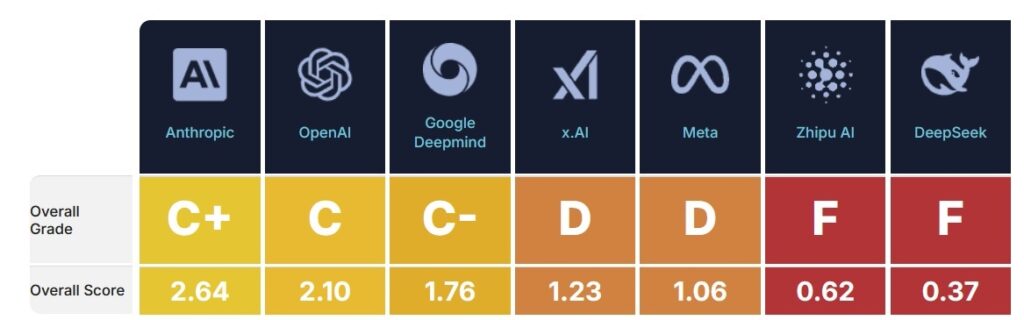
    Results from the saftey test of different AI options as published by the Life Institute.  
Anthropic has he best rating with C+ (2.64) and DeepSeek the worst F (0.37) with other proviers such as OpenAI, Google Deepind, x.AI, Meta dn Zhipu in between

    The systemic difference: security as an end or a means?

    With the big players, security is often just compliance. A system always develops in the direction of its purpose. Looking at the public statements made by the CEOs and owners of the major providers, the question arises as to whether they really care about security and the long-term impact on humanity – or whether they are just a means to an end of growth.

    Sam Altman, CEO of OpenAI, recently put the debate about the energy consumption of AI into perspective by referring to the human effort involved:

    “People talk about how much energy it takes to train an AI model – but it also takes a lot of energy to train a human. It takes about 20 years of life – and all the food you consume in that time – before you get smart.”

    Sam Altman told the Indian Express

    Even more worrying is the attitude of Peter Thiel, co-founder of Palantir – one of the central data collection points that aggregates data from various AI providers, social media and other sources. In an interview, he failed to answer the simple question “Should humanity survive?” with a clear “yes” for 17 seconds.

    I’m no longer so sure whether any test values with a “C+” are really worth a damn. An AI whose founders cannot take a clear position on the common good and the survival of humanity probably lacks the necessary incentive to design its product in such a way that it is truly safe for users and the general population.

    The paradigm shift at Lumo and Confer

    Lumo and Confer do not appear in the major security reports. There is currently no validation by third parties. This is not only because these smaller providers are not as much in the sights of NGOs and researchers as the big tech companies. They also have less incentive to be tested – because their business model is not based on selling data. The focus on the common good in their statutes (Proton Foundation, Signal Foundation) creates a structural protection that is often lacking in profit-oriented companies.

    Confer also relies on this approach: the system has configurable filters for hate speech, self-harm and illegal content as well as automatic checks for false or invented answers. The special feature: this moderation takes place within the encrypted environment. This means that the AI can block harmful content without the operator ever seeing the plain text of your conversation.

    Why does that count for my decision?

    If we think the discussion about AI security, data sovereignty and the ethical foundations of developers through to the end, we come up against a fundamental question: do we want a technology that augments and empowers humans – or one that replaces, manipulates or even views them as a mere data point in a larger algorithm?

    The danger of uncontrolled transhumanism, in which the boundaries between man and machine become blurred without us retaining control over our own identity, is real. It arises where the logic of profit and technological progress proceed without an ethical compass.

    This is where my decision in favor of Lumo becomes not just a technical preference, but an attitude. I’m not looking for an AI that wants to “improve” me by evaluating my data and controlling my behavior. I am looking for a tool that helps me to develop my human intelligence – without sacrificing my sovereignty, my privacy and my right to unbiased thinking.

    After all the research and the unanswered questions, there is only one logical consequence for me:

    My conclusion: I’ll try Lumo

    After trying out Lumo for a few days, I took the following three steps:

    1. I canceled my subscription to ChatGPT and deleted the app from my phone. I’m keeping my online access so that I can continue to access a few bots programmed for ChatGPT.
    2. I officially announced my boycott on QuitGPT .
    3. I have taken out an annual subscription with Lumo .

    I didn’t use the graphics function on ChatGPT much anyway and when I tried to generate a PDF a few times, it was unusable. Everything else works quite well on Lumo. In addition, Lumo is based in Europe and therefore has a decisive advantage over Signal for me: I have currently found the best compromise for me:

    Still not sustainable. Still not regenerative. But the place where I am currently doing the least damage – in full awareness of this.

    What step are you taking now that you are better informed?

    Practical tip for you

    Prompt for AI hygiene

    Would you like the AI to leave out tricks like clickbait and carry out balanced research? You can store a prompt with general impulses in the personal settings of most chatbots. Get your free template now.
    Your registration could not be saved. Please try again.
    Your registration was successful.

    We will occasionally send you information about sustainable technology use and Regeneration Pioneers activities to your email address. No spam. You can unsubscribe at any time.

  • Doughnut Economics – A New Model for a Sustainable 21st-Century Economy

    Doughnut Economics – A New Model for a Sustainable 21st-Century Economy

    Introduction: Why We Need to Rethink Economics

    The 21st century challenges the foundations of mainstream economics. Climate breakdown, rising inequality, and ecological overshoot demand a new approach.
    Doughnut Economics, developed by Kate Raworth, proposes a shift: from a growth-focused economy to one that meets human needs within planetary boundaries.


    What Is Doughnut Economics?

    Doughnut Economics visualizes a safe and just space for humanity: a “doughnut-shaped” area where people’s essential needs are met without breaching ecological thresholds.

    The inner ring represents the social foundation – the minimum standards for a decent life. The outer ring marks the planetary boundaries – the ecological ceiling we must not exceed.

    Between these two rings lies the doughnut: the sweet spot where humanity can thrive.


    The Planetary Boundaries

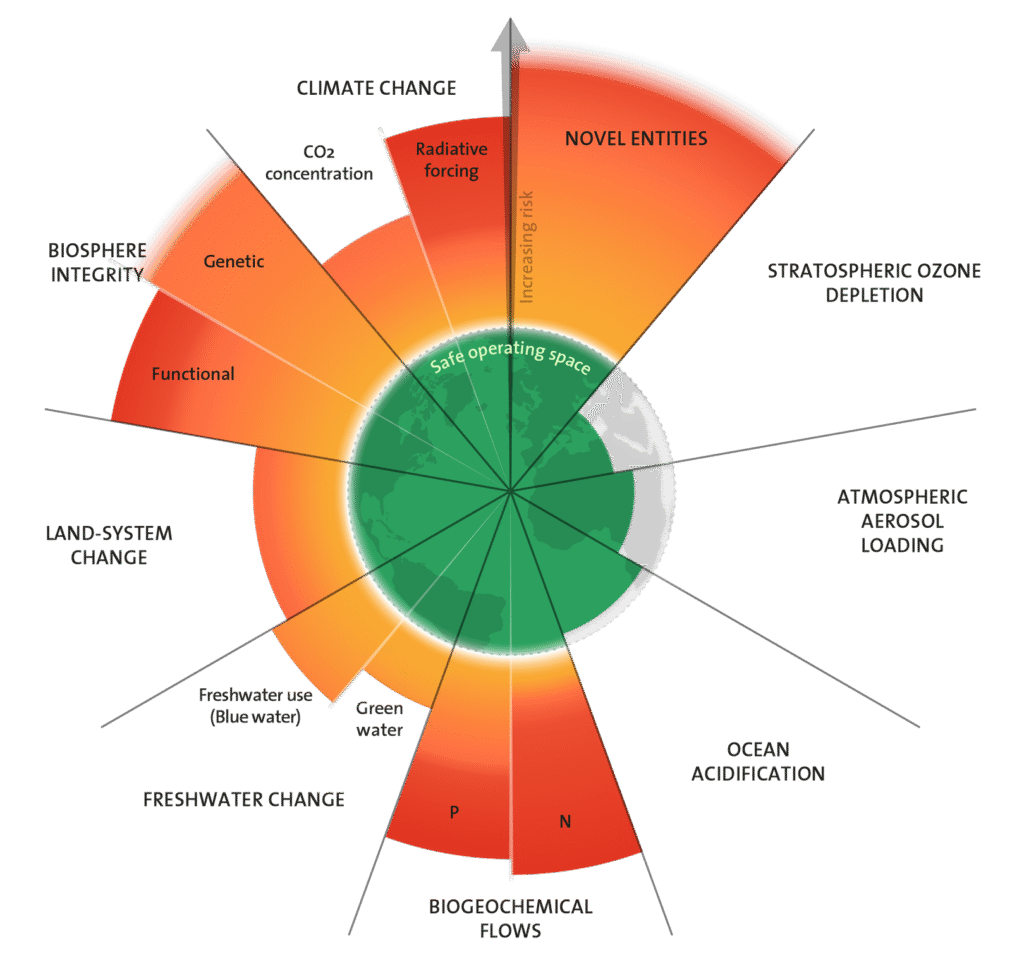
    Originally conceptualized by Rockström et al. and later updated by the Stockholm Resilience Centre (2023), the planetary boundaries framework now assesses nine Earth system processes. As of the latest research, six of these nine boundaries are already breached.

    Planetary Boundaries graphic (2023) by Azote for the Stockholm Resilience Centre. The diagram visualizes the status of nine Earth system boundaries that regulate the stability of the planet. As of 2023, six of the nine boundaries—including climate change, biosphere integrity, land-system change, and biogeochemical flows—have been crossed. The circular chart uses color-coded zones (green = safe, yellow = increasing risk, red = high risk) to highlight the transgression of safe environmental limits
    CC-BY-NC-ND Credit: Azote for Stockholm Resilience Centre, based on analysis in Richardson et al 2023

    🌍 The Nine Boundaries:

    1. Climate Change – Atmospheric CO₂ & surface temperature remains well above safe levels
    2. Biosphere Integrity – Accelerated species extinction and ecosystem degradation
    3. Novel Entities (e.g., plastics, chemicals) – Unchecked chemical pollution
    4. Stratospheric Ozone Depletion – The ozonhole that protects us from UV-radiation
    5. Ocean Acidification – causing marine ecosystem to tip
    6. Freshwater Change – Disruption of the blue water (hydrological cycle) and green water (bound in plants and soil)
    7. Land-System Change – Loss of forests and soil functions
    8. Nitrogen & Phosphorus Flows – Overuse in agriculture leading to
    9. Atmospheric Aerosol Loading – changing moonsoon and rainfalls next to being harmful to humans

    🔗 View full 2023 update – Stockholm Resilience Centre

    These boundaries are interconnected, and their transgression increases the risk of triggering tipping points in Earth’s systems.

    Host a Planetary Boundaries Workshop

    I offer interactive workshops using the Planetary Boundary Fresk – a science-based and creative way to explore Earth’s ecological limits and what they mean for us.
    📩 Want to organize a workshop for your team, university, or community?


    Integrating Doughnut Thinking into Sport, Culture, and Event Management

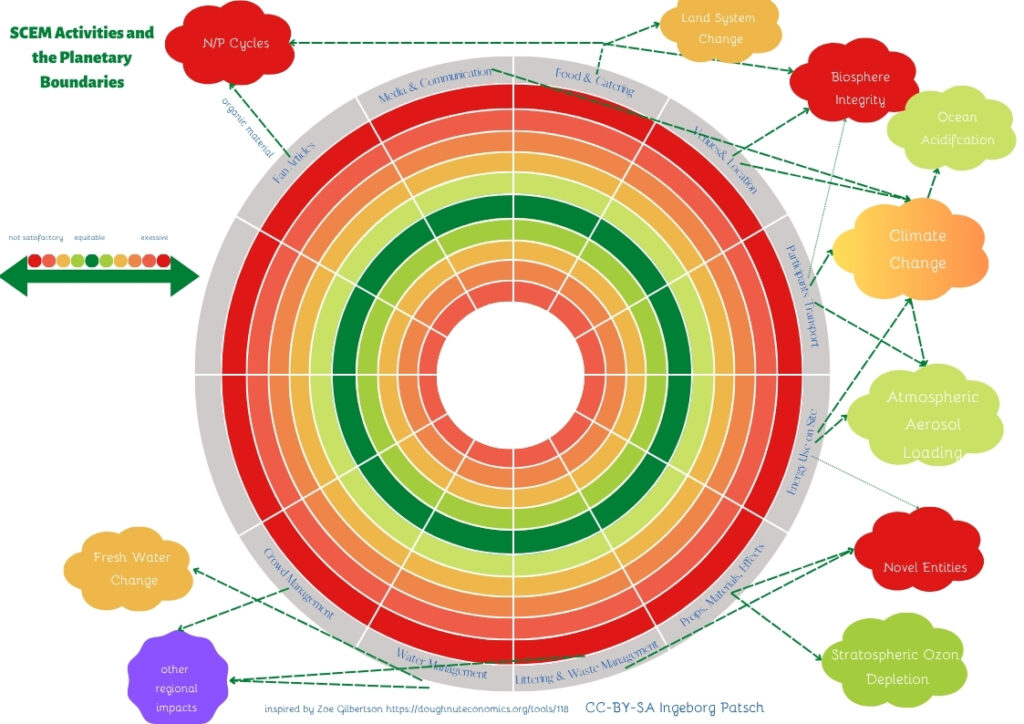
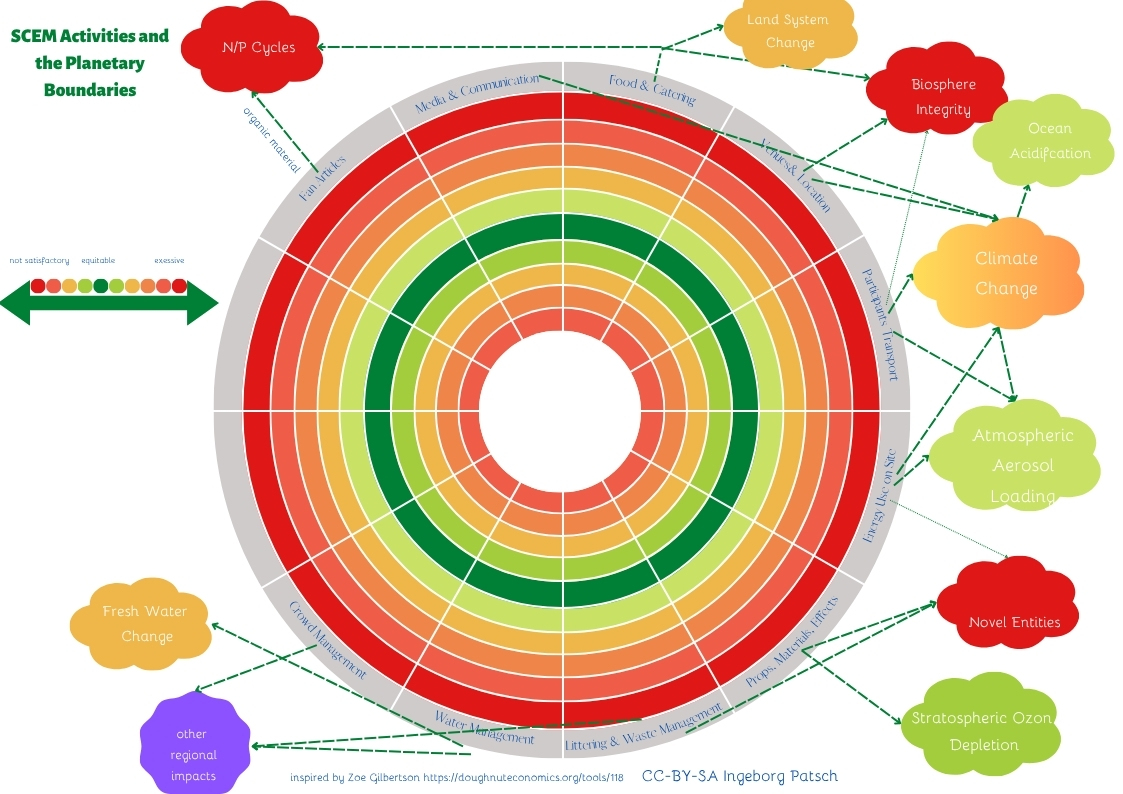
    As part of my university teaching, I developed a custom adaptation of the Doughnut Economics model for the fields of sport, culture, and event management. The adapted doughnut links common sectoral activities (e.g., food & catering, media & communication, transportation, water management) with social outcomes and ecological constraints.

    Custom Doughnut Economics worksheet linking sport, culture, and event management activities with planetary boundaries and sustainability goals.

    📄 👉 Download the interactive worksheet now to explore how your event or initiative aligns with the doughnut principles.

    This visual helps students and practitioners rethink the impact of their work within a regenerative and distributive economic lens.


    Why Doughnut Economics Resonates Today

    Doughnut Economics breaks away from the outdated paradigm of GDP growth as a proxy for progress. It asks deeper questions:

    • How much is enough?
    • Whose needs are being met?
    • At what ecological cost?

    It offers an integrated view of sustainability, equity, and systems thinking, accessible for policy, education, and local action.


    Strengths, Weaknesses, Opportunities & Threats of Doughnut Economics

    Doughnut Economics presents a bold and accessible alternative to mainstream economic thinking. Like any framework, it comes with strengths, limitations, and implementation challenges. Together with one of my students, Elena Dax, we developed the following SWOT analysis to critically assess the concept and its practical potential:


    ✅ Strengths

    • Balanced system design – Integrates both the needs of people and the ecological limits of the planet.
    • Holistic perspective – Highlights the joint relationship between environment, society, and economy (the three E’s of sustainability: environmental, economic, ethical).
    • Accessible visualization – The circular doughnut model is simple and engaging, making it easier for non-experts to understand complex systems thinking.
    • Educational & inclusive – Encourages broader participation in economic discourse, particularly from younger generations and those unfamiliar with traditional economic theory.

    ❌ Weaknesses

    • Potential oversimplification – The visual model can be seen as too basic to capture economic complexities.
    • Lack of practical tools – Some authors criticize that it offers no concrete policy roadmap or prioritized action steps for implementation.
    • Western-centric perspective – Critics (e.g., Gudynas, 2012) argue that the model reflects predominantly Western thinking, which may limit its applicability in diverse global contexts.
    • Limited individual guidance – There’s little orientation on how individuals or small groups can take action.

    🌱 Opportunities

    • Global adaptability – The model can be localized to fit diverse cultures, cities, governments, and communities.
    • Multi-level application – Suitable for use in business, urban development, education, and policy.
    • Encourages innovation – Inspires new ways of thinking about economics, particularly among students and changemakers.
    • Open framework – Its flexibility allows for new data, feedback, and evolving priorities to be incorporated over time.

    ⚠️ Threats

    • Lack of clear change processes – The steps to transition from theory to practice are vague, which can hinder implementation.
    • Resistance to change – Many individuals and institutions are unwilling to give up current privileges or shift priorities.
    • Risk of being dismissed – Policymakers and economists might reject it as too simplistic or radical, slowing broader adoption.
    • Social tension – Systemic changes proposed by the model may create friction between different socioeconomic groups.

    Making It Actionable: From Theory to Practice

    Many cities (e.g., Amsterdam, Brussels) and organizations are already experimenting with the Doughnut model for real-world decision-making.
    It is being applied to:

    • Urban planning
    • Corporate sustainability
    • Educational curricula
    • Civil society initiatives

    The model remains open-ended – and that’s a strength. It invites collaboration, co-creation, and contextual adaptation.

    Checkout local organizations and networks that implement Doughnut Economics in their cities.


    Conclusion: Economics for the 21st Century

    Doughnut Economics gives us the language and the lens to ask:
    What does a thriving economy look like when we respect ecological boundaries and social justice?
    It doesn’t promise easy answers – but it offers the space to ask better questions.

    References

    Gudynas, E. (2012). Is doughnut economics too Western? Critique from a Latin American environmentalist. Views & Voices, Analyses and debate on international development issues. Blog, Oxfam. https://views-voices.oxfam.org.uk/2012/02/is-doughnut-economics-too-western

    Raworth, K. (2017). Doughnut Economics. Seven Ways to Think Like a 21st-Century Economist. London: Penguin Random House.

    Raworth, K. (2018). Kate Raworth. Exploring doughnut economics. Personal website. https://www.kateraworth.com/doughnut/

    Sen, A. (1999). Development as Freedom. New York: Alfred A. Knopf.

    Steffen, W., Richardson, K., Rockström, J., Cornell, S.E., Fetzer, I., Bennett, E.M., Biggs, R., Carpenter, S.R., de Vries, W., de Wit, C.A., Folke, C., Gerten, D., Heinke, J., Mace, G.M., Persson, L.M., Ramanathan, V., Reyers, B. and Sörlin S. (2015). Planetary boundaries: Guiding human development on a changing planet. In: Science 347(6223), 1259855. https://openresearch-repository.anu.edu.au/bitstream/1885/13126/3/1259855.full.pdf

    United Nations – UN (2015). Transforming our world: the 2030 Agenda for Sustainable Development. Resolution adopted by the General Assembly on 25 September 2015. Document A/RES/70/1. New York.

    Host a Planetary Boundaries Fresk

    I offer engaging workshops using the Planetary Boundaries Fresk, a science-based tool to explore Earth system limits and their relevance to our work and lives.
    📩 Interested in organizing a workshop for your university, team, or community?

  • Social business types

    Social business types

    During my work with start-ups, I have observed two different approaches to developing a business plan for a social business. One group follows a traditional approach and focuses on economic processes. There is a risk of losing sight of the organization’s actual public benefit-oriented purpose. Business plans of this type are often detailed in terms of production processes, products and marketing strategies. However, a critical examination of the profound social impact is often missing. If the complex relationships between people are reduced to purely economic transactions, the potential for change that a social business can offer is severely limited.

    The other group of founders deals intensively with the complexity of a social business right from the start. However, this group risks being overwhelmed by the diverse requirements: democratic workplace design, cradle-to-cradle production processes, socially responsible pricing, environmentally friendly distribution channels and much more. Trying to cover all of this at the beginning with a financially stable budget and often limited resources often leads to a reality shock and can result in demotivation.

    Why does it help to know the social business types?

    The definition of social business types can help both groups of founders to manage the complexity at each stage of the start-up. This categorization helps to focus on the essential aspects of the underlying social problem and shows in which areas a social business should excel from the outset in order to be recognized as such. At the same time, knowing your own social business type helps to identify areas where more sustainable behavior is desirable but not essential to achieve the desired change.

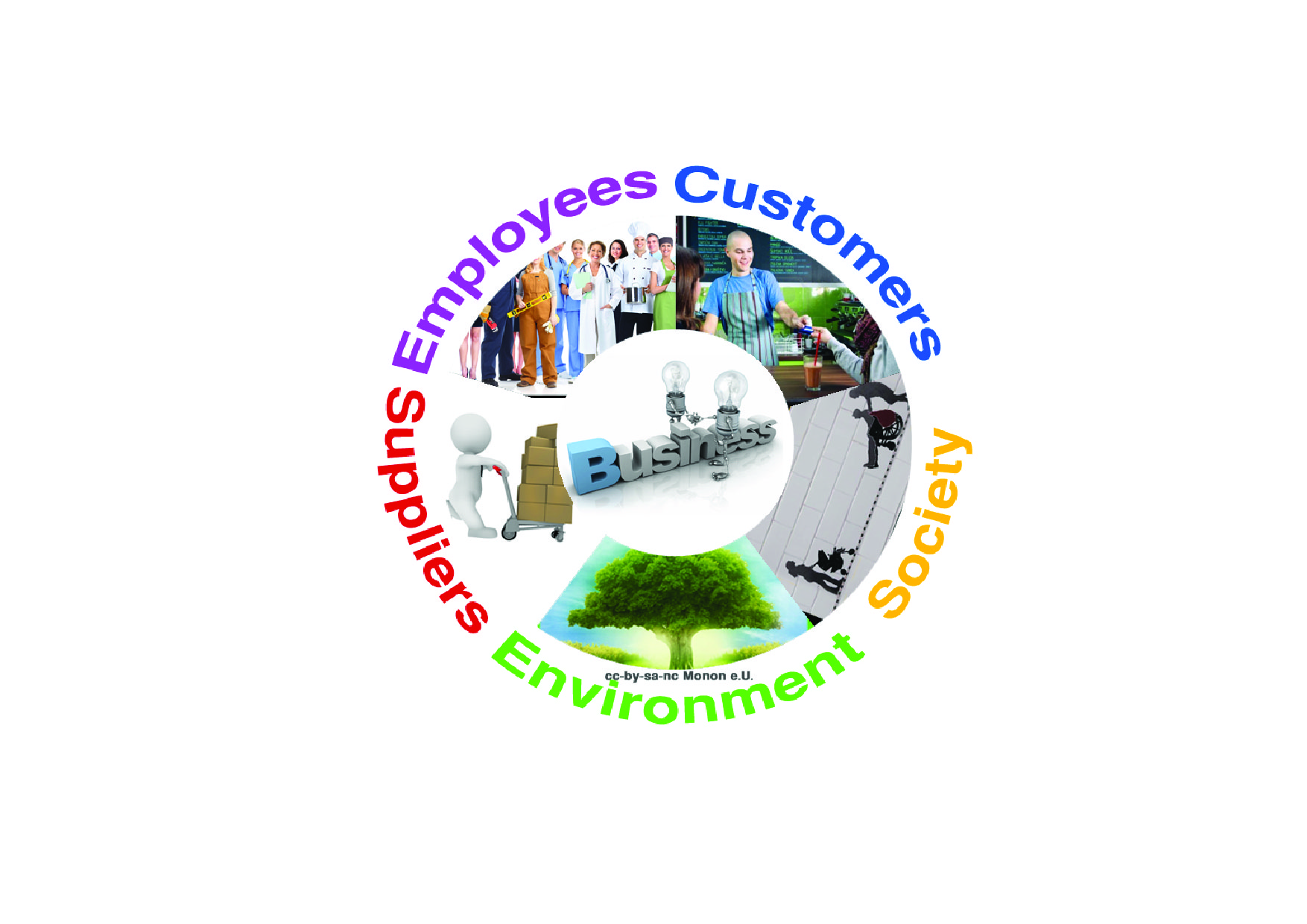
    Based on the theory of the Economy for the Common Good, which focuses on touch groups, as well as Kim Alter’s Social Enterprise Typology, I have developed an easy-to-understand framework of five social business types. These five social business types, which are described below, are all located in the B2B sector and are primarily defined by the target groups on which they focus their efforts. According to many authors (such as Yunus and Alter), a social business is primarily mission-centered. This means that the main goal is to improve the situation of a specific social group, which I will refer to here as beneficiaries. The primary difference between the social business types therefore lies in the way in which these beneficiaries are involved in the organization’s processes or, in the words of the Economy for the Common Good, which contact group the beneficiaries belong to in the (future) social business.

    Work with the Cause Canvas – your tool for developing an effective social business!

    Do you want to apply the five social business types to your idea or structure your impact concept?
    Then grab the Cause Canvas – a collection of practical worksheets to help you gain clarity and find focus.

    📩 I’ll swap the canvas for your email address – and occasionally send you invitations to suitable online events or new social business content. Of course with double opt-in and you can unsubscribe at any time.

    Type A – customer-oriented social business

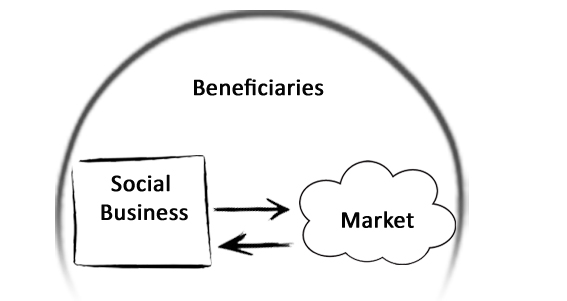
    Social Business Type A - Customer-oriented

    The first type, Type A customer-oriented social business, focuses on a target group that uses or otherwise consumes the products or services produced by the organization. This group, which for the sake of simplicity I call customers in the following, is not only directly influenced by the consumption of the product, but also indirectly by when, where and in what form they have access to these products and services, how they may be packaged and whether the packaging can be returned, whether this product satisfies fundamental needs and to what extent its consumption promotes a sustainable and healthy lifestyle.

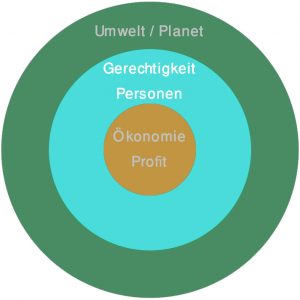
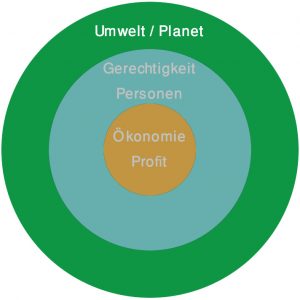
    The focus is on justice and people, i.e. on the social aspect, which requires an intact environment and is in turn the basis for economic sustainability.

    To summarize: in a customer-oriented social business, the aim is to have a positive impact on the life situation of customers (or their family members in the case of children, for example) or to reduce or solve their problems by providing products or services. Particularly in the Global South, the customers in such a social business are often from low-income groups and the aim of the organization is to support these families in satisfying basic needs. Max-Neef describes the topic of satisfying needs and basic human needs very well with his approach to basic human needs.

    A type A social business refers to the social dimension of sustainability, making this social dimension the core element of its essence.

    Type B – employee-oriented social business

    The second type, Type B employee-oriented social business, focuses on the employees, workers and, to a certain extent, the working partners or cooperative members of an organization. In short, everyone who earns their living by making their working time and labor (not the product of their work, which would be type C) available to the corresponding social business. The (positive) effects of a social business cannot be reduced to the financial transactions between employer and employee, but are also constituted by the organization of working hours, possible involvement in decision-making processes, job security (in both senses of the word), training opportunities and much more.

    While type A social businesses want to reach their target group by selling products to them, a type B social business tries to improve their living conditions by employing them. This does not mean that every organization that hires someone is automatically a type B social business. To argue that a social business is a Type B social business, one should, for example, hire groups that would otherwise find it difficult to find employment or involve employees in decision-making processes and profit distribution in a way that is far above the sectoral standard. Often if we take the former approach, we must assume that the business processes must be adapted to the requirements of the employees, such as planning special training (in the case of under-qualified workers) or adapting working hours or the workplace to their needs (e.g. if we focus on single mothers or visually impaired people).

    Like type A, a type B social business relates to the social dimension of sustainability.

    Type C – supplier-oriented social business

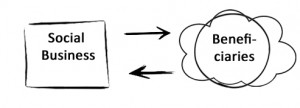
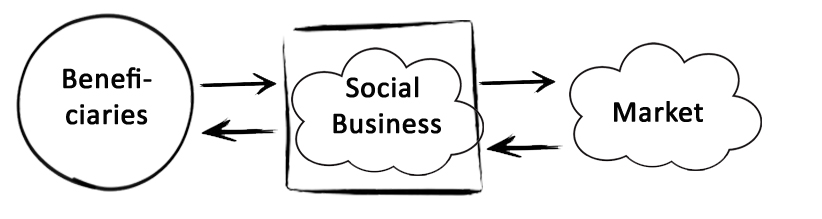
    graphic_intermediary_model_en

    This third group of social businesses includes all those organizations whose focus is on improving the situation of suppliers of raw materials, products or services. Here too, not every company that purchases goods or services from suppliers is automatically a type C social business. Similar to the employee-oriented social business, such a social business is characterized by the fact that it works with vulnerable or not so strong target groups, i.e. small farmers or other small businesses that are often not so competitive due to their size and are therefore at risk of being exploited by larger buyers. A subcategory are social businesses that work with larger suppliers, but which in turn employ such disadvantaged groups. In both cases, a social business of this type should be characterized by standards that are clearly above those of the sector and also demonstrate a closer supplier relationship than a normal business.

    The first group of type C social businesses is primarily concerned with the social situation of small suppliers (smallholders) and maintains contact with them that goes far beyond financial transactions through better networking, training and similar measures. My experience has shown that this category dominates in the economically less developed countries of the global South, where there are many small farmers without the necessary commercial know-how. The second category, which is predominantly found in industrialized countries, are production companies that have set themselves the task of producing commercially available goods in a more socially and ecologically sustainable way. This category is often a hybrid of Type C and Type D social business.

    Type C social businesses focus on the social and environmental dimensions of sustainability from suppliers, with the focus on social aspects predominating in the first category in particular.

    Type D – ecologically oriented social business

    Type_D_environment_en

    The fourth group of social businesses can be defined less by a particular group of people and more by the fact that ecological aspects are in the foreground and therefore everyone benefits from a healthier environment and less pollution.

    Some social businesses of this type could be described as grassroots. Their approach is to achieve greater environmental friendliness by going back to the source: Using fewer raw materials overall and, if they do, using more local and seasonal ones (locally produced cookies from the baker rather than industrially manufactured ones, repair cafés) or developing new and more sustainable business models in the first place (such as the idea of food coops as an alternative to supermarket vegetables).

    Still other type D social businesses rely on technology for their solutions to become more environmentally friendly. Some are working to better distribute and use resources more efficiently through internet platforms (e.g. sharing platforms) while others are inventing new machines or tools to circumvent the often unsustainable mechanisms of the dominant economy(Fairphone or Livin Farms).

    The focus is on the environment or the planet, which is the basis for sustainability on other levels

    While the other four types of social business focus on the social aspect of sustainability (see Ayers), this type of social business focuses primarily on the environment or the planet. More resource-efficient production, waste avoidance and the promotion of sustainable lifestyles that reduce the ecological footprint of customers are at the forefront of such organizations.

    In practice, many environmentally oriented social businesses are often mixed types in which a customer orientation (type A) or a supplier orientation (type C) is combined with the ecological aspects.

    Type E – social business oriented towards the common good (or subsidy-oriented social businesses)

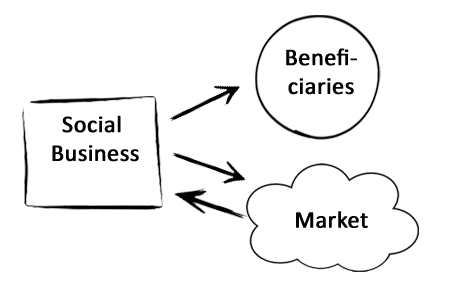
    Type_E_graphic_service_subization_en

    This last group refers to social businesses that cannot or do not want to involve the intended target group in the normal business process, but are in an emergency situation and need access to social services or certain goods. These groups are often characterized by the fact that they have neither the purchasing power nor the manpower to participate in the production or consumption cycle, such as children or people with severe physical disabilities.

    In a Type E social business, a profitable (but of course ecologically and socially compatible) business is established (e.g. a restaurant) and operated. The monthly profits are put entirely (!) into (re-)investments in the business and the cross-financing of social activities. Transparency and democratic structures, which ensure that the money is used fairly, are the be-all and end-all of such a social business oriented towards the common good. This business model is increasingly found in countries where there is no welfare state or similar social democratic institutions that cover such tasks by redistributing resources. But Patagonia also uses this model

    Work with the Cause Canvas – your tool for developing an effective social business!

    Do you want to apply the five social business types to your idea or structure your impact concept?
    Then grab the Cause Canvas – a collection of practical worksheets to help you gain clarity and find focus.

    📩 I’ll swap the canvas for your email address – and occasionally send you invitations to suitable online events or new social business content. Of course with double opt-in and you can unsubscribe at any time.

  • Systemic thinking for changemakers | Acting holistically and effectively

    Systemic thinking for changemakers | Acting holistically and effectively

    An eye for the big picture

    Many people who become socially involved start with a clear cause. An issue that moves them. A problem they want to tackle. But the deeper they get involved, the clearer it becomes: It doesn’t stop at this one problem. Everything is interconnected. Systemic thinking for changemakers helps to make sense of this confusion.

    Anyone committed to preserving biodiversity, for example, quickly comes up against climate change. This in turn is closely linked to water cycles, which are endangered by construction and infrastructure projects. These in turn are linked to tourism, economic policy and global consumer habits. The interdependencies increase the deeper you look.

    The result: excessive demands. Disorientation. Frittering away.

    But there is a way of thinking that does not get lost in this complexity, but finds orientation in it: systemic thinking.


    Why systemic thinking is so important today

    Systemic thinking means recognizing connections, understanding patterns and looking at the big picture. It’s not about simplifying everything – it’s about allowing the right complexity to make smarter decisions.

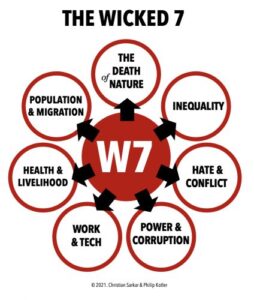
    A powerful framework for this is The Wicked7 project. It identifies seven fundamental, interlinked problem areas that are involved in many social challenges:

    1. The death of nature
    2. Inequality
    3. Hate and conflict
    4. Abuse of power and corruption
    5. Work and technology
    6. Health and livelihoods
    7. Population and migration

    These problems are not independent of each other – they are mutually dependent. If you focus on one of these fields, you will almost always encounter the others. And this is precisely why systemic thinking is so essential.


    How does systemic thinking differ from classical thinking?

    In traditional problem-solving approaches, the logic is usually linear: a problem is identified, a cause is named and a solution is developed. However, this is not enough for complex social and ecological challenges. A different way of thinking is required here.

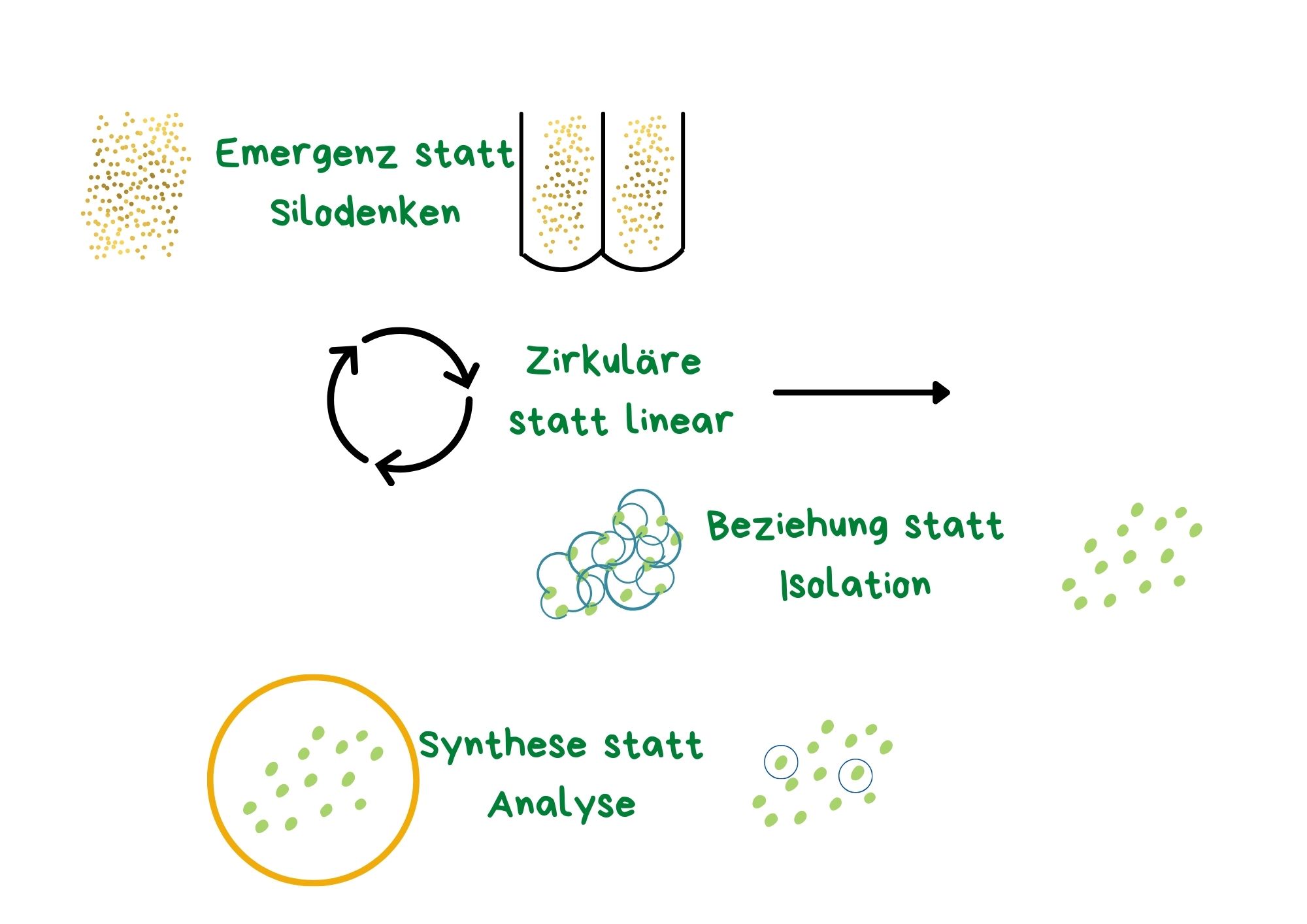
    Systemic thinking differs primarily in four central points:

    1. emergence instead of silo thinking
    Systems develop together. An education system influences an economic system. A health crisis affects political stability. The separation into individual systems is often artificial.

    2. cycles instead of chains
    Impact is not linear. Those who are informed pass on knowledge. Individual impulses develop into feedback loops that can set entire systems in motion.

    3. relationships rather than individual pieces of information
    It is not individual facts but the relationships between them that are decisive: How does poverty affect mental health? What is the link between access to education and climate awareness?

    4. synthesis instead of analysis
    Systemic thinking asks: How is the system as a whole doing? What dynamics are emerging? Looking at the whole comes to the fore – not breaking it down into parts.


    What are the benefits of systemic thinking for changemakers?

    Systemic thinking is not a theoretical extra – but a valuable tool for anyone interested in sustainable change. This way of thinking can be an enormous relief, especially for changemakers who are faced with complex challenges.

    It helps you to sharpen your own focus and use resources in a more targeted way. It makes it possible to think outside the box without getting lost in the diversity. And it makes it clear that many challenges have common roots – and therefore also common solutions.

    I am not alone.
    I don’t have to solve everything.
    But I can make a real difference – where my actions have a leverage effect.

    This attitude not only creates more effectiveness – it also takes the pressure off. Because those who think systemically recognize their role in the larger context and can decide more consciously where commitment has the greatest impact.


    Conclusion: Systemic thinking as a key competence for changemakers

    Systemic thinking is a key skill for social transformation. It does not replace action – but it makes it more intelligent, more networked and more effective in the long term.

    In a world full of complexity and uncertainty, we need people who see the big picture – and act clearly and courageously within it.

    Would you like to improve your own systemic thinking skills?

    Strategies for deep change

    Reserve your place now for the free workshop at the beginning of May and learn about the tools of systemic thinking – and how they can help you to multiply your impact.

  • How can we achieve a world without poverty?

    How can we achieve a world without poverty?

    How can we achieve a world without poverty?

    Poverty is a major problem. But what does “poverty” actually mean? It’s not that easy to say. There are different types of poverty. For example, you can have little money (monetary poverty). Or you can feel poor because other people have more (relative poverty). There is also poverty that has nothing to do with money. Amartya Sen, a well-known thinker, has said that poverty also means not having the freedom to shape your own life.

    What can we do to combat poverty?

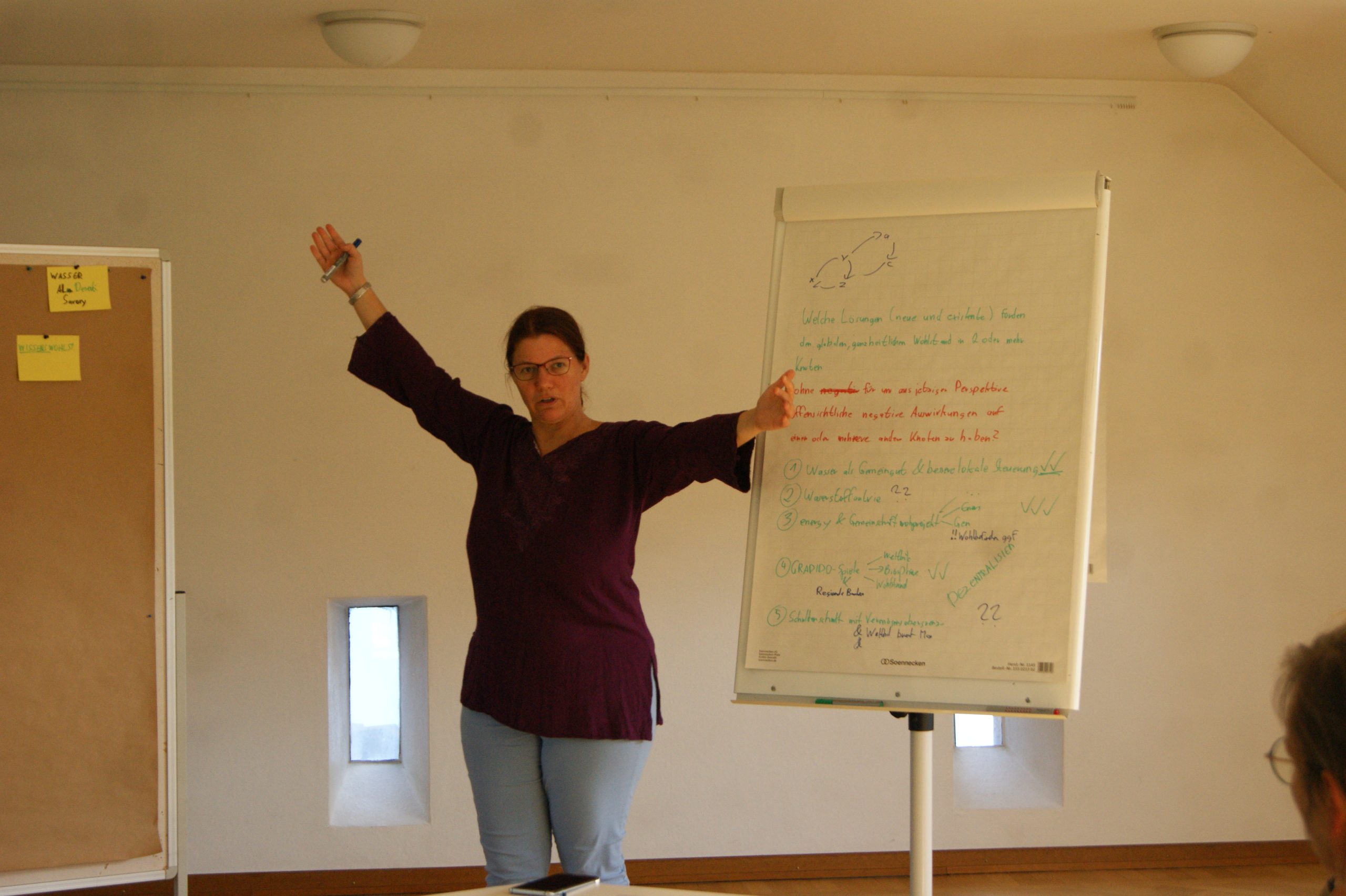
    A few years ago, I led a workshop on this question. Ten people worked intensively on the topic for three hours. We used a tool called the “world systems model”. It was developed by Tony Hodgson and helps us to understand big problems. The model shows that everything in the world is connected: Environment, economy, community and much more.

    Initial findings from the workshop

    In small groups, we talked about the challenges that increase poverty. It quickly became clear that poverty cannot be eradicated without genuine co-determination (for example in politics). One example is water. If people do not have access to clean water, it is difficult for them to escape poverty. And water, in turn, is linked to food, health and nature.

    What happens if there is a basic income?

    We also thought about what would happen if many countries introduced an unconditional basic income (UBI). That would help to solve some problems. But it’s not enough. Why? Because other problems remain: Access to clean water, fair distribution of resources and genuine co-determination of people.

    Holistic prosperity instead of just “no poverty”

    At the end of the workshop, we reformulated the goal: It’s not just about ending poverty. We want a world in which everyone is well off – with prosperity that is not just about money. Examples of prosperity are:

    • Time prosperity: Enough time for what is important.
    • Freedom of choice: The opportunity to shape your own life.
    • Living space: Safe living space and access to resources such as water and food.

    Solutions for a world without poverty

    The workshop showed that there is no simple solution. But there are approaches that can help:

    1. Managing water as a common good → When water is managed locally and collectively, many people benefit. Clean water leads to better health, more stable communities and greater prosperity.
    2. Shared housing projects → In such projects, people live together and share resources such as living space and food. This creates cohesion and helps to reduce costs.
    3. New money models → We need to rethink the financial system. One example is the Gradido game, in which people learn how a different monetary system could work.
    4. Debt cut and asset ceilings → A global debt cut could relieve countries. Asset ceilings would help to distribute resources more fairly.

    What can we do?

    If we want a world without poverty, we need to take action. Let’s start on a small scale: Let’s exchange ideas with others, learn from successful community projects and consider what is possible in our own environment.

    If you are also working on a better world with your organization, take a look at my Strategies for Changemakers offer. My“Possible Worlds” session is open to everyone and we can dive deeper into the question together: How can we shape change?

    A world without poverty is possible – if we change our perspective on the world and act together.